With rising food costs, proper inventory tracking is no longer optional for restaurants. Many operators assume having a positive bank balance equals a profitable month, but that doesn’t always mean profits in your pocket. In fact, a positive bank balance can often mask invisible leaks. While traditional inventory management gives you visibility into what you purchased, granular ingredient-level tracking reveals what you actually used and what you lost. To bridge the gap between making money and maximizing profit, you must move beyond simply counting your inventory and start actively recipe costing through ingredient-level tracking.
Key Takeaways:
- Ingredient-level tracking monitors daily usage as items are sold, while inventory management gives you visibility into total stock remaining.
- An inventory management solution that integrates with your POS system can help track your inventory seamlessly, eliminating manual data entry and human error.
- With accurate and timely ingredient-level data, menu engineering can help identify your best-sellers based on cost and popularity.
Inventory Management vs. Ingredient-Level Tracking: What’s the Difference?
So what is the main difference between inventory management and ingredient-level tracking? Traditional inventory management simply gives you a high level overview of how much stock you have on hand – essentially a snapshot of your inventory. On the other hand, ingredient-level tracking is a more precise count of what you have, highlighting the depletion of stock based on the individual components of a recipe as they are sold. This level of precision is also essential when learning how to cost out a recipe accurately.
For example, inventory management might tell you that you have ten, 50-pound bags of flour in the walk-in. In contrast, ingredient-level tracking knows that every time a Margherita pizza is sold, exactly 250 grams of flour, along with 4 ounces of San Marzano tomatoes and 3 ounces of fresh mozzarella, has been deducted from your inventory.
The Challenge: The Profit Leak
For most restaurants, food cost is the largest variable expense. However, many operators rely on “ballpark” figures or historical averages to estimate their costs. This lack of precision creates a massive blind spot known as the variance gap.
What is variance and how do you calculate it?
- Food cost variance is the difference between your theoretical and actual food cost. It is caused by over-portioning, waste, spoilage, or theft.
- Theoretical food cost is what your inventory usage should have been based on your sales and recipes.
- Actual food cost is what you actually spent on ingredients in a given period.
To calculate your food cost variance you take your theoretical food cost and subtract it from your actual food cost.
- Actual Food Cost = (Beginning Inventory + Purchases) – Ending Inventory
- Theoretical Food Cost = sum(Units Sold of Item) x (Standard Recipe Cost of Item)
- Actual Food Cost – Theoretical Food Cost = Variance
For restaurants even if a small variance can be impactful on your bottom line. Take burgers, for example. If your restaurant has burgers on the menu, you likely go through a lot of ground beef each week and if your kitchen staff consistently over-portions each burger by even half an ounce, you’re losing dozens of potential savings each week.
When you don’t track ingredients individually, potential profit becomes lost to waste, over-portioning, or theft.
The Solution: Utilize Inventory Management Tools and Menu Engineering
Now that you understand the difference between traditional inventory management and tracking costs at the ingredient level, let’s talk about how you can put this into practice.
Simplifying Recipe Costing with Native POS Integration
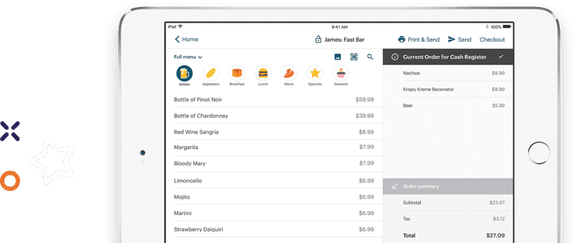
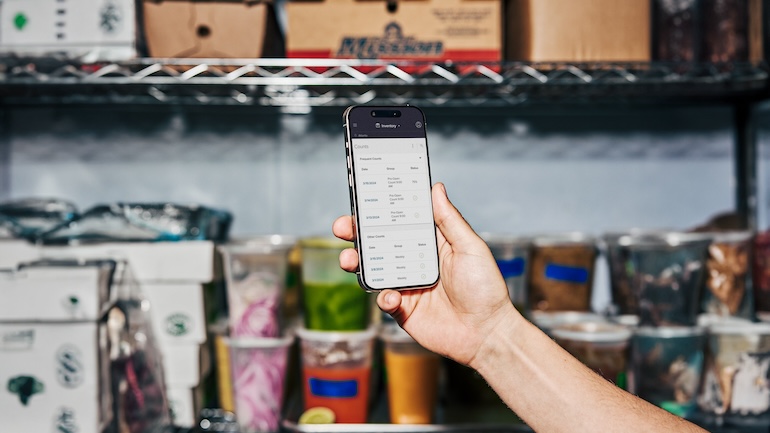
Tracking ingredients at a more granular level can be a nightmare of endless spreadsheets and manually inputting data. That’s where a restaurant inventory management software like TouchBistro Inventory Management can come in handy. TouchBistro Inventory Management is a robust recipe and inventory management platform that helps operators manage their inventory seamlessly, ultimately saving them time and money. The software allows you to see your profit margins for every dish you serve and includes advanced costing tools for optimizing new and existing recipes.
Unlike other third-party solutions that require manual syncing, with TouchBistro Inventory Management, your recipe costs live right where transactions happen. Sales and menu data flows seamlessly from the inventory software into the POS, so you can make informed and timely money-saving decisions. For example, when a server rings up a “Classic Cheeseburger,” TouchBistro Inventory Management automatically deducts 0.25 lbs of ground beef, 2 brioche buns, 1 slice of cheddar, and 0.5 oz of house sauce behind the scenes. You get pinpoint stock accuracy, without managers needing to spend hours weighing and counting inventory for a “Classic Cheeseburger.” And because the information is updated in the POS, servers know when ingredients are running low and a certain dish is about to be out of stock.
Menu Engineering: Turning Ingredient Data into Profit Strategy
Once you have accurate ingredient-level data, you can stop guessing which items are your “best sellers” and start identifying which items are your “best earners.” This is the foundation of restaurant menu engineering – a method that analyzes the popularity of menu items using a four-quadrant matrix, and then uses that information to maximize profit margins. Operators can use this menu engineering matrix to plot every dish into one of four quadrants: stars, plowhorses, puzzles, and dogs.
Here is how to handle each quadrant based on your data:
- Stars (high profitability, high popularity): These dishes are your champions – items that are inexpensive to make and have high profit margins. Keep them consistent, at the top of the menu layout, and don’t alter the recipe unless the ingredient cost spikes dramatically.
- Plowhorses (low profitability, high popularity): People love these dishes, but they aren’t making you much money. Use your ingredient tracking to see where the cost is coming from. Can you reduce the portion size of the side dish? Can you renegotiate the price of the primary protein with your vendor?
- Puzzles (high profitability, low popularity): These dishes are high-margin items that aren’t selling. Your data tells you they should be profitable, so the problem is likely marketing. Try renaming the dish, changing its position on the menu, or having your staff suggest it as a daily special.
- Dogs (low profitability, low popularity): These dishes take up space in your walk-in and don’t contribute to the bottom line. Unless the dish is a brand staple, consider cutting it from your menu entirely.
Mastering recipe costing is about being precise. When you track at the ingredient level, you gain more granular visibility into what’s actually in your kitchen and allows you to operate a more profitable business where every ounce counts.
Looking for a robust restaurant inventory management solution to help you and your team improve margins and reduce waste? Get a free quote for TouchBistro Inventory Management today.

Megan is the Content Marketing Specialist at TouchBistro, where she uses her passion for food to write about the restaurant industry. She’s a big “foodie” at heart, and you can always find her enjoying a delicious meal at a restaurant with friends and family, or cooking one up at home. She also loves relaxing with a good book and making progress at the gym.
Get the Complete Guide to Restaurant Reservations
The right POS should help you increase sales
The right POS should help you increase sales.