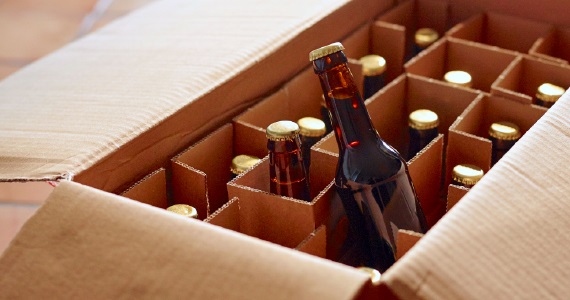
Alcohol delivery laws introduced during the pandemic helped many restaurants stay profitable when foot traffic slowed due to dine-in restrictions. Now, many states and provinces have made these changes permanent after recognizing the many positive impacts of alcohol delivery, including boosting the average check size for takeout and delivery orders.
Of course, these rules differ considerably across North America and change frequently. While states like Iowa, Ohio, and Oklahoma were early adopters of takeout and delivery sales of alcohol, dozens of others have followed suit. The same is true in Canada, with all provinces allowing alcohol delivery, some requiring it to accompany food. Regulations are a bit more complex in the territories, where alcohol may be allowed, restricted, or prohibited based on local legislation, such as in Nunavut.
Though red tape may still be an issue in some places, looser alcohol delivery laws have given restaurants a way to make the most of a valuable income stream. And with simple tools like TouchBistro Online Ordering, offering alcohol delivery is easier than ever before.
To help your restaurant navigate changing liquor laws and the new world of alcohol delivery, we’ll cover:
- Can restaurants deliver alcohol?
- Which U.S. states and cities allow alcohol delivery and pickup
- Which Canadian provinces allow alcohol delivery and pickup
- The benefits of alcohol delivery for your restaurant
- Creative ideas for taking advantage of loosened alcohol delivery laws
To jump ahead to a specific state, click the links below:
- Alabama
- Alaska
- Arizona
- Arkansas
- California
- Colorado
- Connecticut
- Delaware
- Florida
- Georgia
- Hawaii
- Idaho
- Illinois
- Indiana
- Iowa
- Kansas
- Kentucky
- Louisiana
- Maine
- Maryland
- Massachusetts
- Michigan
- Minnesota
- Mississippi
- Missouri
- Montana
- Nebraska
- New Hampshire
- New Jersey
- New Mexico
- New York
- North Carolina
- North Dakota
- Ohio
- Oklahoma
- Oregon
- Pennsylvania
- Rhode Island
- South Carolina
- South Dakota
- Tennessee
- Texas
- Utah
- Vermont
- Virginia
- Washington
- Washington D.C.
- West Virginia
- Wisconsin
- Wyoming
To jump ahead to a specific province or territory, click the links below:
- Alberta
- British Columbia
- Manitoba
- New Brunswick
- Newfoundland and Labrador
- Northwest Territories
- Nova Scotia
- Nunavut
- Ontario
- Prince Edward Island
- Quebec
- Saskatchewan
- Yukon
2026 U.S. Alcohol Delivery Laws By State
Early on in the pandemic, many states and municipalities were quick to relax alcohol delivery laws to help struggling restaurants boost sales of takeout and delivery orders. But while dining restrictions are no longer in place, rising food prices, inflation, and the increased cost of labor all mean that many restaurants could still benefit from the boost in average check size that alcohol to go can provide. The challenge is, alcohol delivery laws differ from state to state, which continues to cause confusion around what restaurants can and cannot do.
Below, we break down the 2026 changes to alcohol delivery laws by state and answer the question, ‘Can restaurants deliver alcohol in each state?’
Note: This list is current as of December 2025. Please check with your current local ordinances before offering alcohol delivery or takeout.
Alabama
According to the Code of Alabama, consumers who are of drinking age can order beer, wine, and spirits from licensed delivery services.
But can you take alcohol to-go from a restaurant in Alabama? According to House Bill 119 from 2022, licensed restaurants can sell alcohol for off-premise consumption, including via the drive-thru and for curbside pickup.
The volume of alcoholic beverages that can be sold curbside will align with what is permitted under the home delivery law in Alabama as of August 1, 2023.
For the latest updates on alcohol delivery in Alabama, check the Alabama Alcoholic Beverage Control Board’s website.
Alaska
COVID-era rules allowing breweries, wineries, and restaurants to deliver beer and wine alongside food deliveries are now permanent in Alaska. As of January 1, 2024, alcohol retailers can only ship alcohol through approved shipping carriers.
Licensed restaurants, breweries, wineries, and distilleries can sell sealed alcoholic beverages for curbside pickup.
The most recent updates are available from Alaska’s Alcohol & Marijuana Control.
Arizona
Per Governor Ducey’s Executive Order from March 2020, restaurants can offer alcohol for sale with delivery and takeout orders. Restaurant licensees can sell alcohol through delivery, pickup, and curbside service, provided that the beverages are in sealed containers.
According to House Bill 2773 bars and liquor stores are allowed to sell cocktails for takeout and delivery, and restaurants are allowed to sell either alcoholic beverages in the original packaging or cocktails for takeout and delivery until the end of 2025. Beginning on January 1, 2026, restaurants can apply to sell to-go mixed cocktails through a special permit.
Check Arizona’s Department of Liquor for the latest alcohol delivery rules.
Arkansas
Can you take alcohol home from a restaurant in Arkansas? According to Act 540, which was passed in April 2023, licensed restaurants can sell sealed alcoholic beverages to customers who are of drinking age alongside the purchase of a meal at the drive-thru, curbside, and via delivery for off-premise consumption during legal operating hours.
Recent 2025 legislation adds third-party delivery permit options, expanding delivery possibilities beyond restaurant employees.
However, alcohol delivery is still limited in Arkansas compared to other states due to the prohibition of alcohol sales in dry counties (which make up roughly half of the state’s counties) and restrictions on alcohol sales on Sundays.
Check with the Arkansas Alcoholic Beverage Control for the latest alcohol delivery and takeaway guidelines.
California
Until January 1, 2027, California restaurants are permitted to sell beer, wine, and pre-mixed drinks or cocktails for pickup or delivery, provided the drinks are sealed or have a secure cap or lid (i.e., no openings for straws). Alcoholic beverages must be sold in conjunction with meals.
Any restaurant taking advantage of this measure must post a notice – either on the premises or online – that puts consumers on notice of limitations regarding open container laws.
As of October 8, 2021, the Governor approved Senate Bill 389, a measure that allows establishments, including restaurants and bars, already selling alcohol to sell pre-made cocktails for pickup through December 31, 2026.
Unlike the previous provision, cocktails to go need to be picked up directly by the consumer, and delivery is not permitted. The restaurant, bar, or distillery must also sell food on its premises, and beverages have to be transported in a trunk or in a vehicle that is not otherwise occupied by a driver or passengers.
You can check with California’s Alcoholic Beverage Control for the latest updates.
Colorado
In Colorado, temporary COVID-era laws that allowed licensed restaurants to offer takeout and delivery of alcoholic beverages between 7 a.m. and midnight became permanent in 2024 under Senate Bill 24-020.
Check Colorado’s Liquor Enforcement Laws, Rules, and Regulations for further details and updates.
Connecticut
Can restaurants sell alcohol to go in Connecticut? Connecticut’s COVID-era laws allowing restaurants, bars, and breweries to start delivering alcohol and offering cocktails to go are permanently in effect as of 2023. Alcohol to go must accompany a food purchase, and delivery may be made by the establishment’s employees or a third-party vendor holding a state transporter permit.
The latest updates are available from Connecticut’s Liquor Control Division.
Delaware
Delaware restaurants, brewpubs, taverns, and taprooms can sell alcohol to go, including cocktails, under House Bill 290, which was passed in April of 2022. This bill allows food and drink establishments to sell alcoholic drinks for curbside pickup, takeout, or drive-thru. Restaurants must sell a minimum of $10 worth of food as part of an alcohol to go order, and seal alcoholic drinks in a container.
As of October 2024, Delaware’s dining and drinking establishments can also offer alcohol delivery through third-party delivery services.
For further updates, check with Delaware’s Office of ABC.
Florida
Florida law allows restaurants to sell and deliver alcoholic drinks intended for off-premises consumption when sold with a food order. To qualify, the sale must be accompanied by food and the charge for food and non-alcoholic beverages must constitute at least 40% of the order (excluding any manufacturer-sealed containers). Alcohol included in an order must be sealed, secured in a bag with a dated receipt, and delivered or transported in compliance with state open-container rules.
To stay up-to-date on Florida’s alcohol delivery laws, check with Florida’s Division of Alcohol and Tobacco.
Georgia
Georgia restaurants are allowed to deliver beer and wine in sealed containers to customers who are of legal drinking age, per a 2020 law.
When it comes to cocktails, licensed restaurants and bars can sell them via takeout or curbside pickup alongside the purchase of an entree, with a limit of two mixed drinks per entree. Customers who pick up cocktails in a vehicle must transport them according to state open-container rules.
Keep in mind that local municipalities in Georgia can choose to opt out of alcohol-related legislation, so it’s best to check the alcohol to go rules with your local jurisdiction.
The latest updates on alcohol delivery laws in Georgia are available from Georgia’s Alcohol & Tobacco Laws & Regulations.
Hawaii
Can you take alcohol home from a restaurant in Hawaii? As of April 2020, Hawaii restaurants were granted temporary allowances to sell unopened beer, wine, and pre-packaged cocktails with food for takeout and delivery. These rules expired when county emergency orders ended, and there is no statewide law allowing alcohol delivery.
Current rules vary by county, so consumers should refer to their local liquor commission for the most up-to-date guidance. For example, Honolulu allows certain types of alcohol to be picked up under regulations, while no permanent statutes were adopted in Maui, Kaua’i, or Hawai’i Island.
Check Hawaii’s Department of Liquor Control for the latest alcohol delivery laws and updates.
Idaho
Restaurants in Idaho with the appropriate alcohol license may sell and deliver unopened bottles of wine and sealed cans or bottles of beer for off-premises consumption. Idaho law does not allow restaurants to sell mixed drinks or any beverages containing spirits for takeout, curbside pickup, or delivery.
Further updates are available from Idaho’s Alcohol Beverage Control website.
Illinois
Illinois retailers, including restaurants and bars, can sell single-serving and mixed alcoholic beverages for pickup and delivery for off-premises consumption until August 1, 2028, according to a 2021 law. Only the business selling the beverages can deliver the alcohol, which means that no third-party delivery is allowed. Customers must be of legal drinking age and the drinks must be sealed and transported in an area that can’t be reached by passengers in a vehicle, such as the trunk.
Further updates are available from Illinois’s Liquor Control Commission.
Indiana
In Indiana, a 2024 bill has codified COVID-era measures allowing bars, restaurants, and other licensed retailers to prepare and sell alcoholic beverages for carry-out to a customer in sealed, nonoriginal containers. The statutory provision refers to delivery to the customer’s vehicle/pickup point on licensed premises in qualified containers.
Further updates are available from Indiana’s Alcohol and Tobacco Commission.
Iowa
Iowa bars and restaurants with the proper licenses and permits can sell mixed drinks, liquor, beer, and wine for off-premises consumption via pickup and delivery, per temporary March 2020 laws that were made permanent in 2021. These establishments can also partner with third-party services to fulfill deliveries. Deliveries can only occur between the hours of 6:00 a.m. and 10:00 p.m.
Further updates are available from Iowa’s Alcoholic Beverages Commission.
Kansas
Kansas clubs, bars, and restaurants with a liquor license can sell sealed cocktails, beer, and wine to-go for pickup until 11 p.m. as of March 2020.
In April 2024, a bill was struck down that would have authorized the home delivery of alcohol. No new statute authorizes home delivery of alcohol in Kansas.
Ongoing updates are available from Kansas’s Alcoholic Beverages Control.
Kentucky
Kentucky’s restaurants and bars can deliver alcohol in sealed containers under laws made permanent in 2021. Alcohol must also be “incidental to the purchase of a meal,” meaning bulk orders are not permitted. These dining and drinking establishments can use third-party services to deliver alcohol to their customers.
It’s important to note that Kentucky has some dry counties where alcohol sales are prohibited, and the above laws do not apply. Some local counties also prohibit alcohol sales on Sundays.
The most recent updates are available from Kentucky’s Alcoholic Beverages Control.
Louisiana
As of 2020, restaurants, bars, and distilleries in Louisiana can sell sealed containers of beer and wine with takeout and curbside pickup orders and may offer delivery via third-party platforms, provided all state requirements are met. Under Louisiana’s current administrative rules, only malt beverages and wine may be offered for delivery from the licensed premises of a restaurant permit holder, and all deliveries must include food. Mixed drinks and cocktails are not authorized for off-premises delivery.
For the most up-to-date information and guidelines around the state’s alcohol delivery and takeout laws, visit Louisiana’s Alcohol & Tobacco Control website.
Maine
In Maine, restaurants and bars can sell beer, wine, and cocktails to go to anyone who is also ordering food (as long as they are of age), as of an April 2020 executive order that was made permanent in 2023. Distilleries can sell alcoholic beverages without a food purchase as long as they meet regulations for the type of cocktail and container. If being picked up in a motor vehicle, drinks need to be placed in the trunk or non-passenger compartments of the vehicle and labeled.
Specific guidelines around Maine’s alcohol delivery laws and up-to-date information can be found on Maine’s Bureau of Alcoholic Beverages & Lottery Operations page.
Maryland
In Maryland, the temporary COVID-era measures allowing restaurants and bars to offer alcoholic beverages to-go and for delivery expired in mid-2023.
However, as of 2024, consumers can order alcohol from retail license holders that are authorized to deliver alcoholic beverages for home delivery through a new delivery service framework. This framework allows licensed retailers to offer home delivery of beer, wine, and spirits through third-party delivery services that obtain a Local Delivery Service Permit. It’s unclear whether this law applies only to liquor stores or if it also includes restaurants, so the best approach would be to check local rules for current practices.
You can check with the Alcohol, Tobacco, and Cannabis Commission for the latest guidance on alcohol delivery and takeaway in Maryland.
Massachusetts
As of 2024, a temporary rule was made permanent, allowing restaurants and bars in Massachusetts to sell mixed drinks to-go with the purchase of a food item. Customers have to be of legal drinking age, and the drinks must come in a sealed container.
For specific guidelines and the latest updates, you can visit Massachusetts’s Alcoholic Beverages Control Commission.
Michigan
In Michigan, restaurants and bars with a Class C liquor license can sell cocktails, beer, and wine for off-premises consumption, while third-party services can deliver those drinks to customers. This 2020 law is in effect until the end of 2025.
For more recent updates, visit Michigan’s Department of Licensing & Regulatory Affairs.
Minnesota
As of April 2020, Minnesota restaurants with liquor licenses are allowed to sell wine and beer to go along with food orders. However, to-go cocktails and mixed drinks are still prohibited.
The rules also stipulate that restaurants with alcohol to go can only sell alcohol with food in its original, unopened packaging, and sales are capped at 72 ounces of beer, cider, or hard seltzer and 750 milliliters of wine per order.
More up-to-date information can be found on Minnesota’s Alcohol and Gambling Enforcement website.
Mississippi
Can you take alcohol to-go from a restaurant in Mississippi? Mississippi allows restaurants to sell single, sealed bottles of wine to go when the wine accompanies a pickup food order. Additionally, restaurants located in a Leisure and Recreation District (LRD) are permitted to sell mixed drinks with to-go food orders for curbside pickup, provided they have the appropriate license.
And, thanks to House Bill 1135, licensed businesses and restaurants can deliver liquor, beer, wine, or light spirits to customers within a 30-mile radius. However, deliveries cannot be made to anyone appearing intoxicated or to dry counties/cities.
Check with Mississippi’s Alcoholic Beverage Control site for the most recent updates.
Missouri
In Missouri, restaurants and bars can sell mixed drinks to go, provided that customers also purchase a meal, as of April 2020, and more permanently, in 2021. The Missouri ‘to-go alcohol’ sales law also states that the alcohol containers must be durable, leak-proof, and sealed, and not exceed 128 ounces. The law mandates that alcohol can be sold for takeaway from 6 a.m. until 1:30 a.m. every night of the week.
For the latest updates on the sale of alcohol to go in Missouri, check Missouri’s Alcohol & Tobacco Control website.
Montana
As of March 2020, Montana businesses with an active alcoholic beverages license can sell alcohol for off-premises consumption. What kinds of drinks are included? Licensed Montana businesses can sell alcoholic beverages in prepared servings, original packaging, or growlers within 300 feet of the premises through curbside pickup or a drive-thru.
For the latest updates, you can visit Montana’s Alcohol Beverage Control Division.
Nebraska
Nebraska’s restaurants and farm wineries with licenses can sell beer, wine, and spirits to customers placing takeout or delivery orders of food. Pre-made cocktails and other alcoholic beverages are also permitted, as long as the containers are sealed with a lid.
For the latest updates on Nebraska’s alcohol delivery laws, check with the Nebraska Liquor Control Commission.
Nevada
In Nevada, the question of whether restaurants can deliver alcohol is a bit complicated because the state’s alcohol delivery and pickup laws vary widely by county and even by city.
For instance, Las Vegas allows restaurants to offer curbside pickup and delivery of alcohol. In 2021, a new bill was passed that allows Clark County restaurants to also deliver cocktails, beer, bottles, and more via third-party services like Uber Eats, DoorDash, and Postmates. This law was still in effect as of December 2025.
You can check Nevada’s Alcoholic Beverage Control for specific guidelines for each county.
New Hampshire
As of July 2021, New Hampshire restaurants with a license for on-premises alcohol consumption can offer beer and wine with food for takeout and delivery. In order to continue delivering takeout, bars and restaurants need to pay $250 per year in licensing fees to the New Hampshire Liquor Commission. This bill is still in effect as of December 2025.
A new bill enabling on-premises licensees to purchase a license that allows the sale of drinks made with distilled alcohol will be introduced in July 2026.
For the most up-to-date information, check with the New Hampshire’s Liquor Commission.
New Jersey
In New Jersey, restaurants and bars with the appropriate licenses can include alcohol with takeout and delivery orders. In May 2020, a bill expanded this to include mixed drinks, provided they are sold in closed and sealed containers.
In August 2022, the Division of Alcoholic Beverage Control adopted a new rule to allow bars, restaurants, and liquor stores to use third-party delivery services like DoorDash, Instacart, and Amazon Flex. Businesses interested in offering third-party alcohol deliveries can apply for a third-party delivery permit with the Division’s licensing department for a fee of $2,000. The permit expires at the end of June of each year and can be renewed annually.
The most recent updates can be found on New Jersey’s Division of Alcoholic Beverage Control website.
New Mexico
In January 2021, lawmakers introduced a bill that would allow restaurants to deliver beer and wine for the first time ever, with a minimum $25 food purchase.
On July 1, 2021, a number of bills signed into law went into effect, including significant changes to New Mexico’s liquor laws. New Mexico now allows for alcohol delivery from restaurants, liquor stores, grocery stores, breweries, wineries, distilleries, and third-party delivery drivers. These changes are still in effect as of December 2025.
For current updates and guidelines, check with New Mexico’s Alcoholic Beverage Control.
New York
New York was one of the first states to allow restaurants to sell alcohol for pickup and delivery. On March 16, 2020, the New York State Liquor Authority announced that all licensed on-premises establishments could sell alcoholic beverages for off-premise consumption, as long as the alcohol was accompanied by food. This included mixed drinks, as long as the beverage was placed in a closed container.
While in 2021, New York temporarily bid farewell to cocktails to go, the state’s 2024 budget extended cocktails to go from restaurants and bars for another five years.
For further updates, check with New York’s State Liquor Authority.
North Carolina
As of July 2024, North Carolina restaurants and bars can deliver and sell two mixed drinks per customer, with each mixed drink not exceeding 24 ounces, as long as they are sealed and accompany a food purchase.
For the most up-to-date information on North Carolina’s alcohol delivery laws, check with North Carolina’s ABC Commission.
North Dakota
In North Dakota, selling beer and wine for takeout or delivery is not permitted.
For rules and guidelines, check North Dakota’s Alcoholic Beverage License page.
Ohio
As of October 2020, Ohio restaurants, bars, small breweries, micro-distilleries, and wineries can sell alcoholic beverages for carryout or delivery, as long as they accompany a meal. This policy has now been made permanent.
And, as of January 2021, establishments are also allowed to deliver alcohol in limited circumstances, as long as it remains in its original container. Deliveries can be made seven days a week, on holidays, with new extended hours. As of December 2025, this law is still in effect.
For specific guidelines regarding alcohol delivery and takeout in Ohio, visit Ohio’s Department of Commerce.
Oklahoma
Oklahoma restaurants, bars, and clubs with the appropriate beverage licenses have been able to deliver and sell spirits, beer, and wine to go since 2020. However, only employees of those restaurants and bars that hold the proper liquor license can deliver alcohol. Alcohol delivery via a third-party company, like Postmates or DoorDash, is not permitted in the state.
In November 2022, several new bills were signed that changed how Oklahomans can serve alcohol permanently. SB 169 expands the definition of an original container of alcohol to go to include manufactured mixed drinks, like canned cocktails. SB 269 allows restaurants and bars to sell to-go alcohol at a lower price than on-premise drinks.
As of October 2024, Oklahoma lawmakers are considering permitting third-party alcohol delivery.
For more details about alcohol delivery and pickup in Oklahoma, check with Oklahoma’s ABLE Commission.
Oregon
In Oregon, restaurants that sell beer and wine to go – meaning those that currently have an Off-Premise License – can offer curbside pickup, as long as it’s within 100 feet of the establishment.
In 2021, Oregon began allowing restaurants and bars to sell cocktails to go in sealed containers. You can find more details on Oregon’s Drinks To Go website page.
Depending on their license, Oregon bars and restaurants can deliver alcohol directly to customers or use a third-party delivery service to fulfill orders.
For the most current information, check with Oregon’s Liquor Control Commission.
Pennsylvania
Can you take alcohol out of a restaurant in Pennsylvania? Restaurants in the Keystone State with the right permits can sell beer and wine for takeout.
While restaurants could sell mixed drinks to go during the pandemic, this law has since expired. A March 2022 bill to permanently allow to-go cocktails to be sold by restaurants and bars has been abandoned by the state’s senate.
However, as of September 2024, Pennsylvania restaurants, grocery stores, and convenience stores can sell ready-to-drink cocktails to go. While this law allows restaurants to sell pre-made canned cocktails (like White Claws and High Noons) made by permitted distillers, it prohibits restaurants from creating and selling their own mixed drinks for takeaway.
More information about Pennsylvania’s current restrictions on alcohol delivery and pickup can be found on Pennsylvania’s Liquor Control Board website.
Rhode Island
A 2022 law made Rhode Island’s COVID-era rules allowing restaurants to sell takeout beer, wine, and mixed drinks permanent. Per the legislation, restaurants with alcohol to go must be Class B liquor license holders and can sell up to two bottles of wine, 144 ounces of beer, and 72 ounces of mixed drinks in bottles, growlers, or other sealed containers with takeout orders.
Alcohol delivery is not permitted in Rhode Island.
For the most recent updates, you can visit the State of Rhode Island Department of Business Regulation.
South Carolina
Despite efforts to revive expired COVID-era laws temporarily allowing restaurants to sell beer and wine with drive-through and curbside pick-up orders, alcohol delivery and curbside pickup are not currently legal in South Carolina. While a bill to reinstate these permissions has passed the South Carolina House of Representatives, it has not yet been approved by the Senate.
More details can be found on South Carolina’s Department of Revenue website.
South Dakota
Unlike many other states, South Dakota has not issued any special permissions for alcohol delivery by restaurants. However, those establishments that already have an off-sale delivery license are permitted to use it.
More information is available from South Dakota’s Department of Revenue.
Tennessee
COVID-era measures that allowed Tennessee restaurants to offer alcohol, beer, and wine for takeout and delivery have expired, meaning selling alcohol to go is no longer legal in the state.
More information and the latest updates are available from Tennessee’s Alcoholic Beverage Commission.
Texas
As of May 2021, Texas restaurants can deliver alcohol, as long as the drinks are accompanied by food purchases. This included beer and wine in manufacturer-sealed containers, and mixed drinks in sealed and tamper-evident containers. Restaurants can also sell alcohol to go and for delivery via third-party delivery services.
For the latest update on Texas’s alcohol delivery laws, check with the Texas Alcoholic Beverage Commission.
Utah
Utah has some of the most rigid liquor laws in the country, so it is unsurprising that no special exceptions were made to allow alcohol delivery or pickup during the pandemic.
However, on June 1, 2022, new liquor laws went into effect to allow bars and restaurants to offer beer to go in sealed containers, with the amount not exceeding two liters. As well, licensed restaurants must ensure that guests have eaten before getting a beer to go.
For more specific information, you can check with Utah’s Department of Alcoholic Beverage Control.
Vermont
Can restaurants sell alcohol to go in Vermont? In 2023, Vermont extended pandemic-era laws that allowed restaurants and bars to sell beer, wine, spirits, and “spirit-based products” (i.e., cocktails) for takeout and delivery, as long as the alcohol was accompanied by a meal. These laws will remain in effect until July 2025.
Many Vermonters want these alcohol to go laws to stay. Similarly, in a national survey, 60% of respondents were in favor of permanently legalizing alcohol to go.
For further updates, visit Vermont’s Department of Liquor Control website.
Virginia
Is alcohol delivery legal in Virginia? Yes. Virginia law allows restaurants to offer alcoholic beverages, including wine, beer, and mixed drinks, for pickup and delivery. Restaurants are limited to selling up to four mixed drinks per customer. Each drink has to contain at least one mixer, and each order must contain at least one meal for every two drinks. This law is in effect until July 1, 2026.
More specific information about the current alcohol delivery guidelines is available from Virginia’s Alcoholic Beverage Control Authority.
Washington
As of July 2023, licensed restaurants and bars in Washington can sell spirits, beer, wine, and mixed drinks for takeout or delivery. Alcoholic beverages must be accompanied by a complete meal, have a secure cap, and be transported out of the driver’s reach.
More details around the guidelines are available from the Washington State Liquor and Cannabis Board.
Washington D.C.
According to the Alcoholic Beverage and Cannabis Administration, establishments that are licensed to sell alcohol on-premises can also sell alcohol for takeout and delivery in a closed container between 6 a.m. and 1 a.m. with a food order of one or more items.
For more information, check out Washington, D.C.’s Alcoholic Beverage and Cannabis Commission.
West Virginia
Since 2021, West Virginia restaurants have been able to apply for a permit to offer alcohol to go and third-party delivery options, like Uber Eats and Grubhub. A 2024 law made cocktails to go a permanent fixture in West Virginia.
As of December 2025, these rules were still in effect, with more information available from the West Virginia Alcoholic Beverage Control Administration.
Wisconsin
In Wisconsin, the Wisconsin Department of Revenue issued Emergency Order #8, allowing certain liquor license holders the ability to provide carry-out orders of alcoholic beverages in their original, sealed containers (if permitted by municipal ordinance).
On March 26, 2021, the state legislature passed a new law that lets bars and restaurants sell mixed cocktails to go in individual containers, through carry-out only. As of December 2025, the law is still in effect.
For updates, check with the Wisconsin Department of Revenue.
Wyoming
The question of whether restaurants can deliver alcohol in Wyoming is dependent on the type of liquor license the restaurant holds. Restaurants that operate under a Full Retail Liquor License can deliver alcohol or offer alcohol with takeout.
However, most restaurants in the state operate under a Restaurant Liquor License, which prohibits alcohol sales for off-premise consumption. This means that if you’re a restaurant with a Restaurant Liquor License, you cannot deliver alcohol or offer alcohol with takeout. The same holds for a Bar & Grill liquor license.
On February 9, 2021, Governor Gordon signed House Bill 13 with the effective date of July 1, 2021. The new legislation clarifies that businesses with a retail liquor license can deliver or contract third parties to deliver liquor and malt beverages to customers. As of December 2025, this law is still in effect.
Among the changes is the redefinition of the serving area in restaurants. Before, restaurants had to have a specific room to serve alcohol, but now that requirement is removed. However, restaurants are still required to have food as their “primary source of revenue,” but they no longer need to be “full-service” to obtain a permit to sell alcoholic beverages.
For the latest updates to Wyoming’s liquor laws, check with Wyoming’s Department of Revenue.
2026 Canadian Alcohol Delivery Laws by Province and Territory
Now, let’s turn north to look at how alcohol delivery laws work in Canada – and where they’re headed. We’ll walk through current and upcoming alcohol delivery regulations by province, and answer the question of whether restaurants can deliver alcohol across Canada.
Alberta
In Alberta, a Gaming, Liquor and Cannabis (AGLC) Regulation amendment was issued, allowing licensed restaurants and bars to sell alcohol as part of their takeout and delivery services. It was later announced that restaurants and bars could continue to offer alcohol delivery and pickup even after the end of pandemic restrictions. This law was still in effect as of December 2025.
More information about these guidelines is available from the AGLC.
British Columbia
As of March 2021, B.C. restaurants are permanently allowed to deliver alcohol with takeout meals.
Customers are only allowed to purchase alcohol if they are also purchasing a meal, and other liquor laws still apply, such as age restrictions.
More information is available from B.C.’s Liquor and Cannabis Regulation Branch.
Manitoba
On April 15, 2020, COVID-era legislation was made permanent in Manitoba, permitting restaurants to sell sealed beer, wine, cider, and coolers for takeout and delivery.
As of May 24, 2022, new legislation has also been introduced to make it easier for pop-up or seasonal businesses and wine bars to obtain a liquor license.
Details about the new guidelines are available from the Liquor, Gaming and Cannabis Authority of Manitoba.
New Brunswick
Back in April of 2020, New Brunswick temporarily permitted the sale of alcohol for takeout and delivery under the Emergency Measures Act.
On May 4, 2021, the province announced new amendments to the Liquor Control Act that allowed restaurants to sell alcoholic drinks with takeout orders permanently. Changes to the act require employees to take an online training course, as outlined in the province’s news release.
For the latest updates to these rules, check with the Government of New Brunswick.
Newfoundland and Labrador
As of 2020, Newfoundland and Labrador restaurants can deliver alcohol alongside food orders. This law remains in effect as long as certain conditions are followed.
For more information about the new guidelines, visit the Newfoundland Labrador Liquor Corporation’s website.
Northwest Territories
In May of 2020, the Northwest Territories’ Department of Finance announced changes to the territory’s liquor regulations that allow for liquor delivery. According to the new rules, restaurants and bars must also establish their own alcohol delivery service and cannot use private services or taxi drivers. As of 2025, these expanded rules are still in effect.
For the most up-to-date information, visit the NWT Liquor Licensing Board.
Nova Scotia
As of May 2021, Nova Scotia restaurants can sell alcohol, including cocktails and mixed drinks, for delivery or takeout with food orders.
As of April 1, 2022, completion of training is also required for those delivering alcohol with food orders as a third-party, whether as an employee or independent worker. This amendment also places restrictions on how much alcohol can be ordered and increases fines for breaking the law.
More information is available from the Alcohol, Gaming, Fuel and Tobacco Division of Service Nova Scotia.
Nunavut
In Nunavut, no changes have been made to the territory’s alcohol delivery and pickup laws. In fact, Nunavut’s alcohol laws state that each community may choose whether alcohol is allowed, restricted, or prohibited entirely. So, is alcohol delivery legal in the territory? No.
For more information, check with the Nunavut Liquor and Cannabis Commission.
Ontario
As of late 2020, licensed restaurants and bars in Ontario can include alcohol with food as part of takeout or delivery orders. Third-party delivery services are allowed to deliver alcohol on behalf of the licensee.
Specific alcohol delivery guidelines are available from the Alcohol and Gaming Commission of Ontario.
Prince Edward Island
In December of 2020, Prince Edward Island announced that restaurants with a package sales license can permanently offer home delivery of alcohol to provincial residents, and that will continue going forward.
More information is available from the PEI Liquor Control Commission.
Quebec
In December of 2020, the Quebec National Assembly passed Bill 72, which allows restaurants to sell alcoholic beverages through third-party delivery apps alongside food orders.
As for takeout orders, restaurants can sell alcoholic beverages in sealed containers (e.g., wine, beer, and cider, but not hard liquor containing over 7% alcohol content) for takeout as long as the alcohol is accompanied by some food.
More information about Quebec’s updated alcohol delivery rules is available from Quebec’s Alcohol, Racing, and Gaming Commission.
Saskatchewan
As of November 2021, restaurants in Saskatchewan that hold a valid liquor permit can sell alcohol with takeout and delivery orders. Restaurants, however, are not allowed to establish retail displays or have in-location shipping for takeout alcohol.
For the most recent updates, check with Saskatchewan’s Liquor and Gaming Authority.
Yukon
Can you take alcohol out of a restaurant in the Yukon? As of February 2022, the Yukon’s guidelines for bars and restaurants do not permit the sale of alcohol for takeout and delivery. No new legislation has been passed on this issue since then.
More information is available from the Yukon Liquor Corporation.

3 Creative Ideas for Selling Alcohol To Go
While alcohol delivery served as a beacon of relief throughout the pandemic, many restaurants can still take full advantage of this revenue-driving opportunity in 2026 and beyond. Here are some of the creative ways that restaurants use alcohol delivery to boost sales.
1. Creative Food and Drink Pairings
Most states and provinces that permit alcohol delivery and pickup require that orders be accompanied by a meal or food of some kind. As a result, many restaurants have come up with creative pairings for their food and drink selections.
To cater to customers who were more interested in grabbing a nice bottle of wine than a full meal, New York City’s La Compagnie des Vins Surnaturels paired its extensive wine list with snackable charcuterie boards.
To customers who come to you for the grub, entice them to buy booze for pickup or delivery with meal deals that come with to-go cocktails. For example, you could sell a family-size paella with a pitcher of sangria for takeaway.
2. DIY Cocktail Kits
Though not all states and provinces allow for the sale of hard liquor, some do. For restaurants in those areas, the ability to sell hard liquor has led to the sale of cocktail kits that customers can prepare at home.
For instance, Nice Guys in Cape Coral, Florida, created cocktail kits for its signature Negronis, mules, mojitos, margaritas, and more. Each kit came with bottles of liquor, as well as house mixers, garnishes, glasses, and detailed instructions.
While most customers have returned to enjoying cocktails in-venue, you can still generate revenue on cocktail kits by marketing them for holidays. For example, you can create a mulled wine cocktail kit for Christmas or a mimosa kit for Mother’s Day.
3. Happy Hour Pricing
If your state allows, extend your happy hour pricing to takeout and delivery orders. Doing so will help you upsell takeout and delivery customers on alcohol, which can significantly increase your average order value during slow times.
There’s no question that alcohol delivery offered restaurants a beacon of hope throughout the peak pandemic years. And with some of these loosened liquor laws now permanent, alcohol delivery can serve as a valuable new source of revenue for years to come.

Katherine is the Content Marketing Manager at TouchBistro, where she writes about trending topics in food and restaurants. The opposite of a picky eater, she’ll try (almost) anything at least once. Whether it’s chowing down on camel burgers in Morocco or snacking on octopus dumplings in Japan, she’s always up for new food experiences.
Free online ordering signs for your restaurant
Get our restaurateur newsletter: The Bistro Insider
Your Complete Guide to Restaurant Reservations
Download Guide